Instrument
Santur
Summary
The Santur is one of the most important instruments of Persian music. Played with two delicate wooden mallets, it is known for its clear, warm, and shimmering sound. For centuries, it has been a central instrument of classical Persian music and a symbol of its elegance and expressive beauty.
Description
Santur – The Crystal Voice of Persian Strings
The Santur is one of the oldest and most celebrated instruments of Persian music. A struck string instrument with a bright, shimmering, and expressive tone, it has held a central place in Iran’s classical musical tradition for centuries. Its distinctive sound and wide tonal range make it a powerful medium for conveying the subtle melodies, emotions, and refined aesthetics of Persian music.
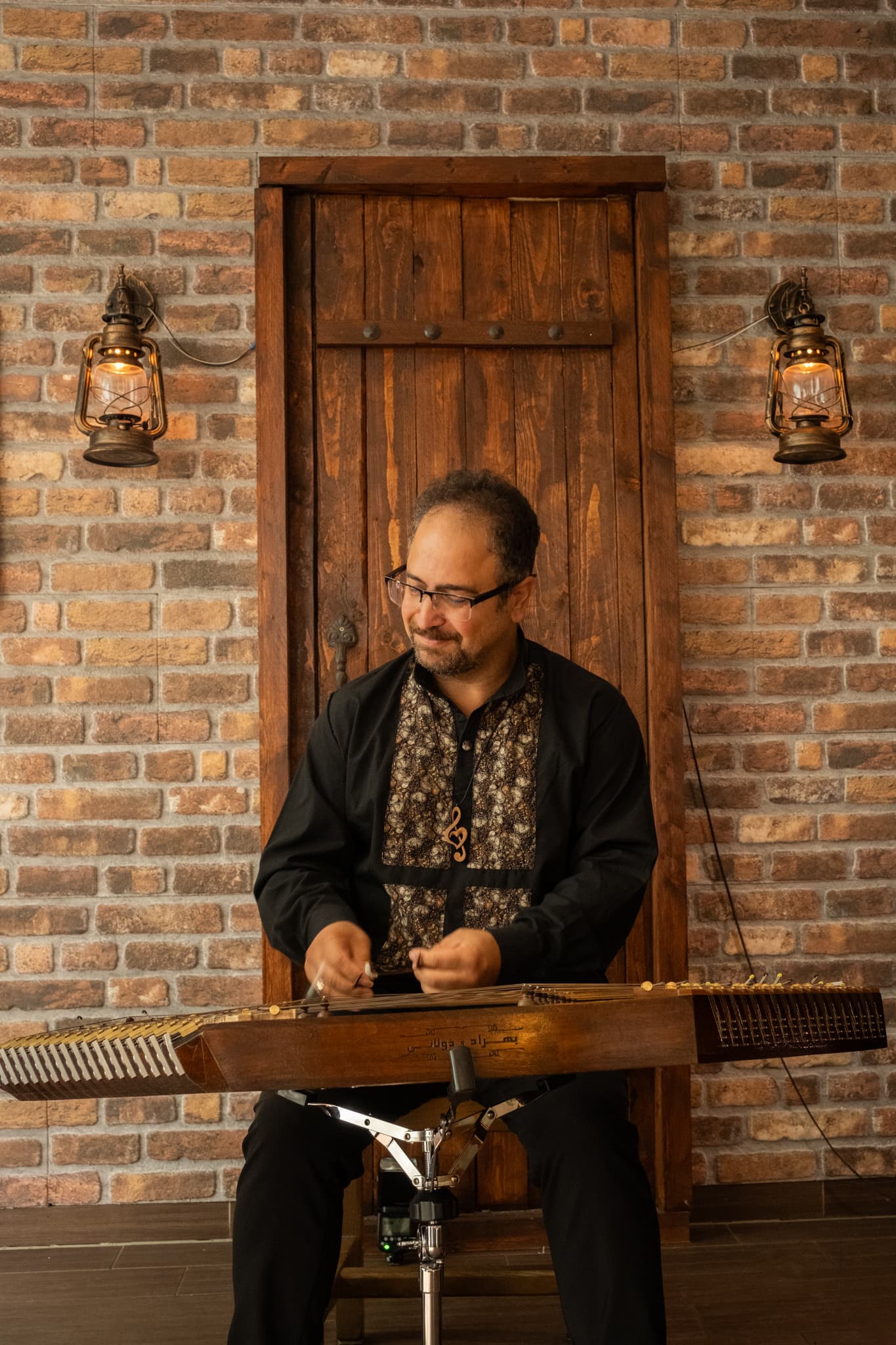
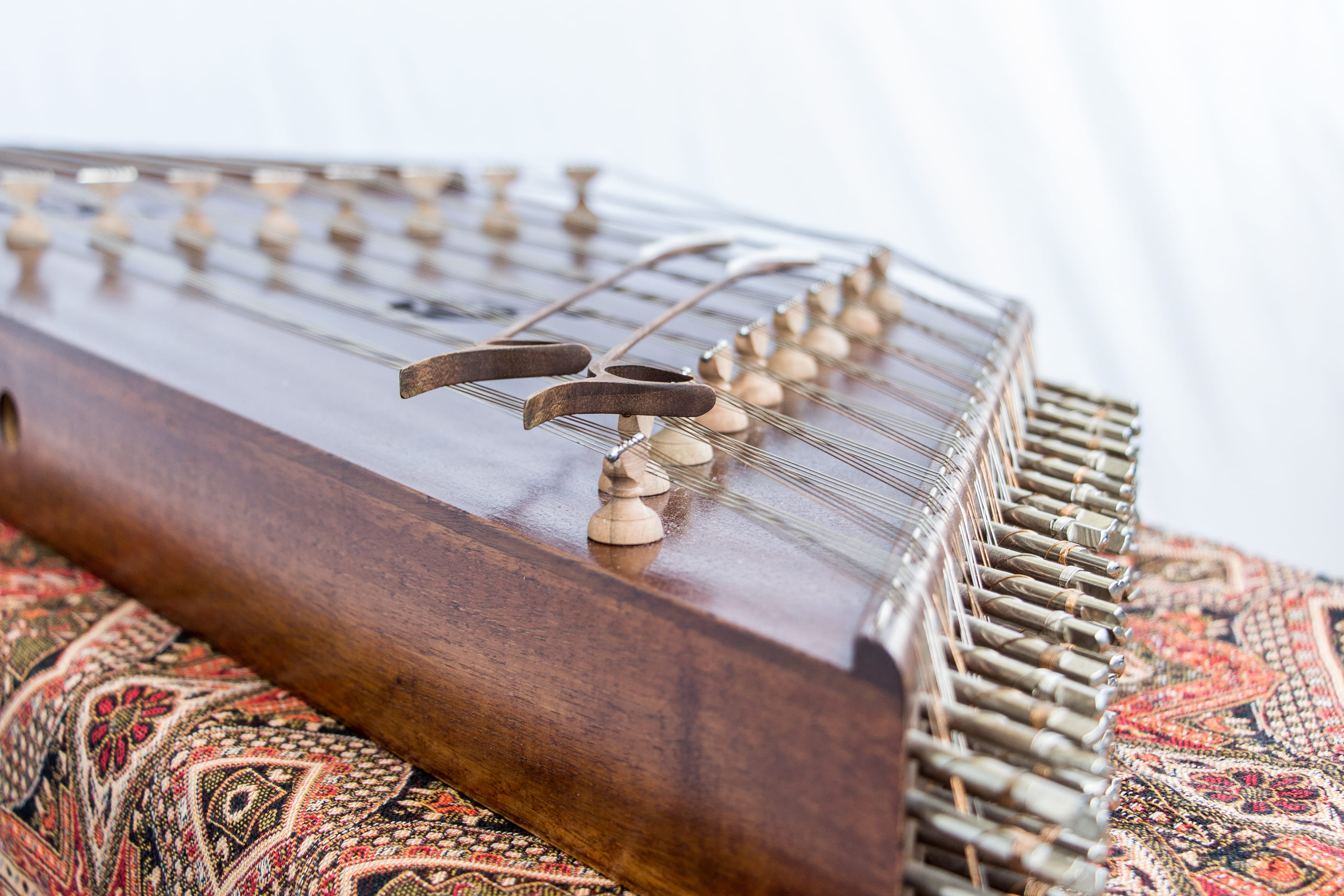
The instrument features a trapezoid-shaped wooden body strung with numerous metal strings stretched across small bridges. The strings are played with two lightweight wooden mallets known as mezrabs. This unique playing technique allows for remarkable agility, delicate ornamentation, and expressive nuances, ranging from soft and poetic whispers to brilliant and energetic passages.
The origins of the Santur reach far back into history. Historical evidence and artistic depictions suggest that similar instruments existed in the Iranian cultural sphere many centuries ago. Over time, the Santur influenced the development of related hammered string instruments across Asia and Europe. Yet the Persian Santur has preserved its own distinct character through its unique construction, tuning system, and performance tradition.
Within the classical Persian musical system, the Santur occupies a position of great importance. It is capable of performing all major dastgahs and avazs, offering exceptional melodic flexibility and expressive depth. Whether as a solo instrument or as part of an ensemble, its sound adds richness and elegance to every performance. Generations of master musicians have expanded its repertoire and helped preserve its artistic heritage.
Today, the Santur is not only a symbol of Persian classical music but also an important instrument in contemporary and intercultural musical projects. Its sound blends beautifully with string, wind, and percussion instruments from diverse traditions, creating new possibilities for artistic collaboration. In this way, the Santur serves as a bridge between tradition and innovation—deeply rooted in history while remaining relevant in modern musical expression.
For many listeners, the sound of the Santur evokes the poetry, beauty, and cultural depth of Persia. Its resonant and enchanting tones invite audiences on a journey through emotions, memories, and musical storytelling, making it one of the most captivating instruments of Persian music to this day.
Ensemble members
Ensemble members
Musicians in the ensemble who play this instrument.